









Innovation doesn’t “destroy work” so much as it reallocates it—often painfully, often unevenly, and usually faster than companies (and humans) are emotionally prepared for. The most useful frame isn’t “Will AI take my job?” but “Which tasks are becoming cheap, which are becoming valuable, and how do I move with the value?”
What’s actually happening
Let’s start with a blunt truth: most “future of work” takes are either (a) utopian, (b) apocalyptic, or (c) a thinly disguised ad for someone’s consulting practice.
Reality is more boring—and more actionable. Jobs are bundles of tasks. Tech tends to nibble the tasks first, then the job title changes later. That’s why the same role name can exist across decades while the day-to-day work becomes unrecognizable.
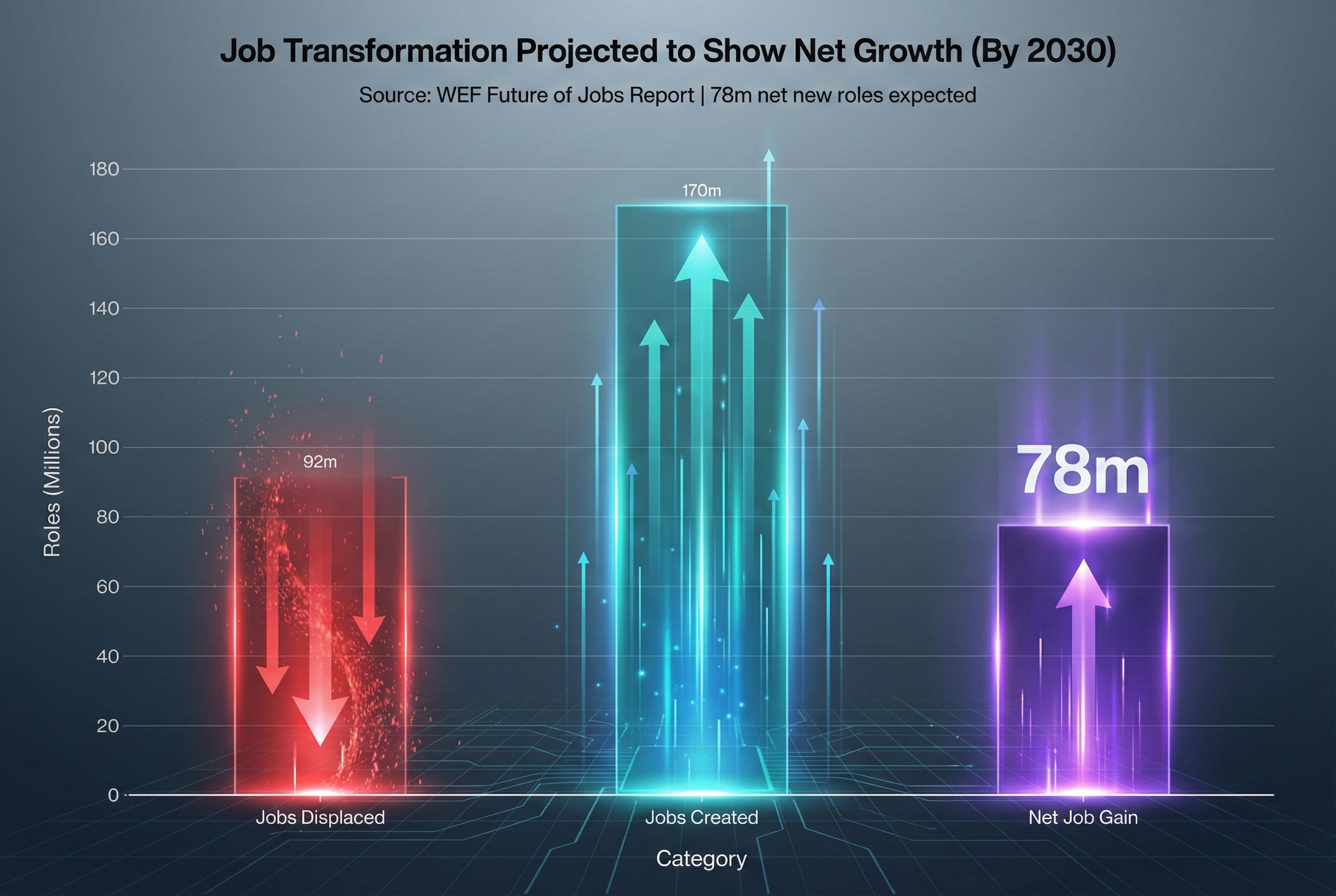
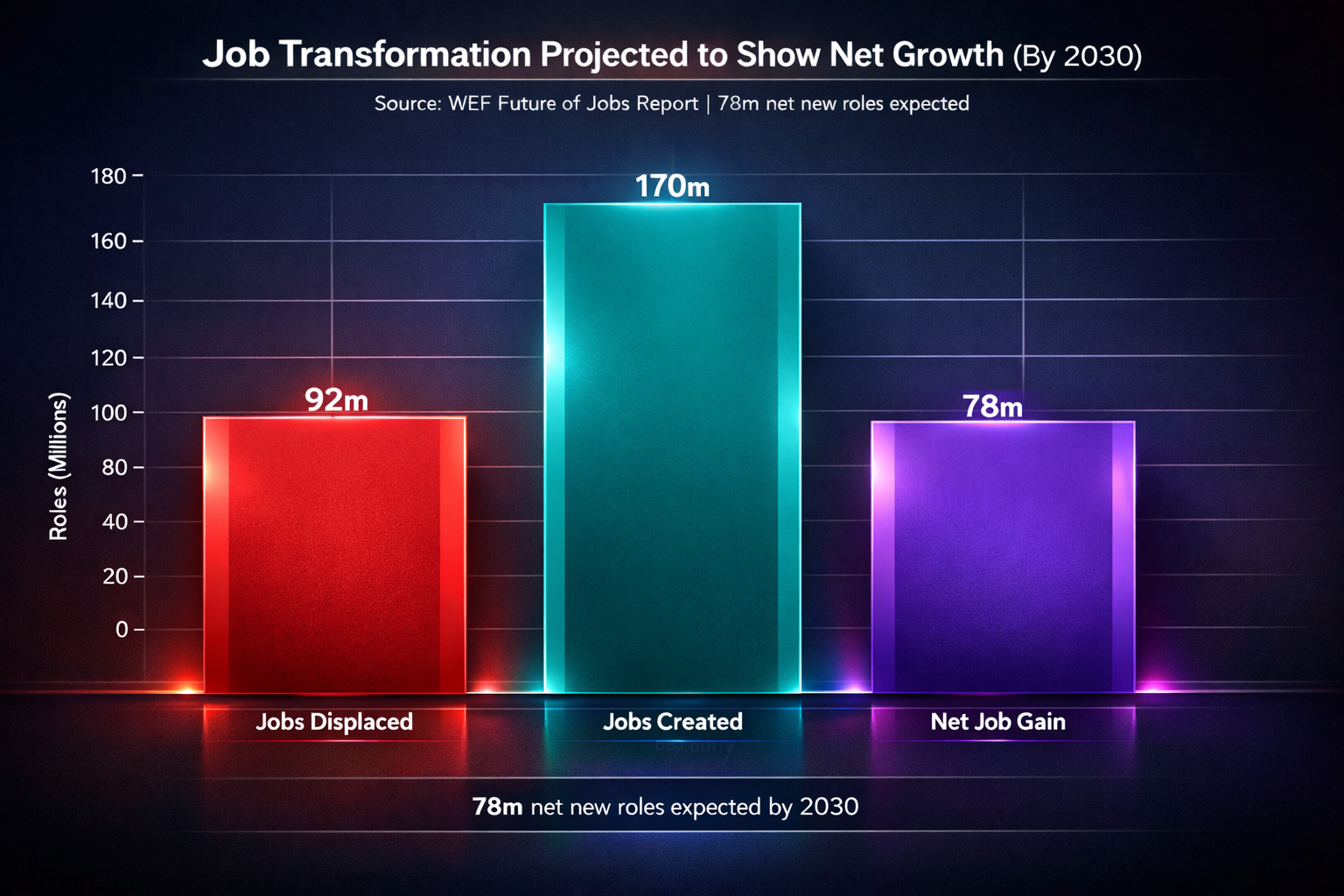
If you want one credible headline number that captures the scale without turning into sci‑fi, the World Economic Forum projects that by 2030, 92 million roles will be displaced while 170 million new roles will be created—net +78 million. That doesn’t mean everyone wins; it means the market keeps moving and your personal outcome depends on whether you move with it.
Also: “created” doesn’t mean “created in your town, for your industry, at your salary, with your current skills.” It means created somewhere, and often for people who look nothing like the folks being displaced.
What history teaches (and what it does not promise)
A lot of people reach for history as reassurance: “We’ve always adapted.” That’s true in aggregate and over long time horizons, but it can be cold comfort if you’re the person whose role gets hollowed out this year.
MIT’s reporting on research covering 1980–2018 notes that automation in the U.S. displaced more jobs than it created over that period, with a strong impact on manufacturing and routine work. Read that again: for decades, “technology creates more jobs than it destroys” was not the lived experience for a lot of workers.
Two important implications:
-
The transition matters more than the long-run story.
-
The “new jobs” aren’t always accessible without deliberate retraining and real employer investment.
One more underrated point: technological change doesn’t politely affect one job at a time. It often spreads across clusters of related roles because they share similar tasks, tools, and workflows. Research on the impact of technological change across similar occupations highlights this spillover dynamic.
So if you’re thinking, “My role is safe, it’s not like that other role,” the more honest answer is: maybe for now—but if your task mix overlaps, the pressure arrives eventually.